
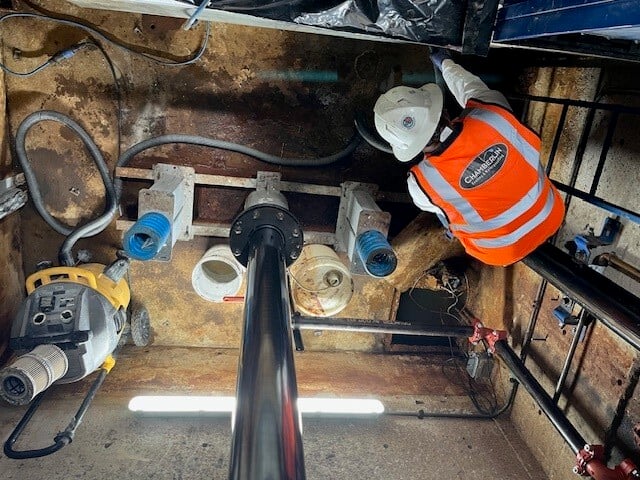
If you manage a commercial property, run a business, or oversee building maintenance, keeping operations running smoothly often comes down to protecting what’s behind the scenes. Few areas are as vital or as easy to overlook as your elevator pit. Because elevator pits sit below ground level and often directly in the line of fire of the local water table, they are particularly vulnerable to groundwater intrusion, hydrostatic pressure, and structural leaks. Left unchecked, even a minor trickle can quickly turn into equipment failure, concrete deterioration, severe safety hazards, and hefty repair bills.
At Chamberlin Roofing & Waterproofing, our crews bring specialized below-grade technical expertise to keep your elevator pits bone-dry, fully compliant, and protected against costly operational downtime.
What Is an Elevator Pit (And What’s Hiding Inside It)?
An elevator pit is the dedicated space located directly beneath the lowest landing of an elevator shaft. While tenants and visitors never see it, the pit serves as the backbone of your elevator’s day-to-day safety and operation.
Typically constructed from poured concrete, this space houses a complex network of essential mechanical, structural, and electrical equipment, including:
- Safety buffers designed to absorb impact in emergencies
- Hydraulic cylinders and heavy mechanical assemblies
- Oil collection containers to manage lubricants
- Electrical sensors and wiring vital for control systems
- Guide rail supports keeping the elevator cab aligned
- Drainage systems or sump pumps
Because so much of this equipment relies on sensitive electrical and mechanical parts, moisture is its worst enemy. Even a small, seemingly minor leak can quickly snowball into major operational downtime, expensive equipment damage, and serious safety hazards for your building.
Chamberlin crews are specifically trained in below-grade leak diagnosis and safety protocols, ensuring every square inch of your elevator pit is thoroughly evaluated and expertly sealed without compromising day-to-day building operations.
Why Do Elevator Pits Leak in the First Place?
Water has a persistent way of finding any weak spot, especially in below-grade structures surrounded by moist soil. The primary drivers of elevator pit leaks include:
- Groundwater Intrusion and Hydrostatic Pressure: When soil surrounding your foundation becomes saturated from heavy rain, irrigation, or a rising water table, water exerts intense hydrostatic pressure against concrete walls and floors. Over time, that relentless pressure forces water right through tiny concrete pores, structural joints, and micro-cracks.
- Foundation Cracks and Construction Joints: Concrete naturally develops small cracks as a building cures and settles over the years. Construction joints where separate concrete pours meet are also prime real estate for water penetration. Common entry points include wall-to-floor seam joints, expansion joints, pipe penetrations, and cold joints.
- Internal Plumbing and Drainage Failures: Not all pit water comes from the ground outside. Internal building issues such as burst water lines, backup drains, HVAC condensate overflow, or fire suppression system leaks frequently find their way straight down into the elevator pit.
Warning Signs Your Elevator Pit Needs Attention
Catching water intrusion early is the single best way to avoid budget-busting emergency repairs. Keep an eye out for these clear warning signs such as:
- Standing Water: Any pooling water at the bottom of the pit needs immediate investigation; it's rarely just simple condensation.
- Rust and Corrosion: Flaking rust on guide rails, steel supports, fasteners, or electrical boxes indicates persistent moisture exposure.
- Efflorescence: White, chalky powder on the concrete walls means water is actively migrating through the slab and leaving mineral deposits behind.
- Concrete Deterioration: Spalling, flaking, or cracking concrete points to long-term moisture penetration that may compromise structural integrity.
- Musty Odors and Mold: Damp smells and visible mold spores ruin indoor air quality and signal trapped moisture.
The Chamberlin Approach: Positive-Side vs. Negative-Side Waterproofing
Choosing the right waterproofing strategy depends on whether you are constructing a new facility or retrofitting an existing building. Chamberlin’s field experts analyze your building's unique conditions to specify and execute the ideal solution:
- Exterior (Positive-Side) Waterproofing: Applied to the outside of the pit foundation walls during new construction. This is the ideal defense because it blocks water before it ever touches the concrete, preventing structural degradation entirely. Chamberlin field technicians ensure precise sheet installation, seamless lap welds, and durable protection boards to keep exterior water out permanently.
- Interior (Negative-Side) Waterproofing: Applied directly from inside the elevator pit itself. When exterior excavation isn't feasible on existing, fully operational buildings, interior solutions stop water after it has entered the wall assembly. Chamberlin crews specialize in negative-side retrofits, delivering dynamic, long-lasting barrier systems with minimal disruption to tenant activity or building operations.
Proven Waterproofing Systems Installed by Chamberlin Crews
Because no two commercial structures are identical, Chamberlin matches the exact system to your structural requirements and environmental demands:
- Sheet-Applied Waterproofing Membranes (Positive-Side Waterproofing): Prefabricated sheets bonded directly to the exterior foundation walls before backfilling. They provide consistent factory-controlled membrane thickness and high puncture resistance, making them ideal for new construction applications where broad, flat coverage is required.
- Fluid-Applied Waterproofing (Positive-Side Waterproofing): Seamless liquid membranes applied by roller, trowel, or spray that conform to intricate geometric shapes, tie-ins, and pipe penetrations without seams or joints. Chamberlin crews maintain strict mil-thickness controls for continuous, impenetrable exterior coverage.
- Crystalline Waterproofing (Negative-Side Waterproofing): Deeply penetrating cementitious treatments applied to interior concrete surfaces that react with moisture to form insoluble crystals inside concrete pores, blocking water migration permanently from within.
- Polyurethane Chemical Grout Injection (Negative-Side Waterproofing): The go-to interior solution for active leaks in existing structures. Expanding polyurethane foam is injected directly into wall cracks and joints by trained Chamberlin technicians to react with moisture and shut down water flow in minutes.
Protect Your Property with Chamberlin Roofing & Waterproofing
Don't wait for a minor leak to turn into major equipment failure or elevator shut-downs.
At Chamberlin Roofing & Waterproofing, our team brings unmatched craft skill, safety leadership, and dedicated field experience to every project. Whether you need pre-construction positive-side waterproofing or emergency negative-side chemical grout injection on an active leak, our crew delivers reliable, long-lasting below-grade waterproofing solutions tailored specifically to your building.
Keep your elevators safe and dry by contacting us today to schedule an expert pit inspection and receive a customized remediation plan.